Wholesale Electrical Test Equipment Manufacturer
Electrical measurement, calibration and test equipment for power systems: energy meter calibration, relay testing, power quality analysis, CT and PT transformer testing, split-core and solid-core current transformers, and BeiDou and GPS time servers. The range described on this site follows the manufacturer's own category pages and datasheets.
Address, telephone and email below are the manufacturer's published contact facts. Product scope is taken from the manufacturer's own category pages.
Product families
Energy Meter Calibration Equipment
Energy meter calibration equipment is used to check the error of an energy meter against a reference, so that a meter installed in the field can be…
Relay Test Sets
Relay test sets inject current and voltage into a protection relay and check whether it operates at its settings. They are used for secondary…
Power Quality Analyzers
Power quality analyzers record voltage, current, harmonics, flicker and other disturbances on a distribution system, so that the cause of a power…
Split Core Current Transformers
Split core current transformers clamp around an existing conductor, so current can be measured without breaking the circuit. They are used with…
Current Transformer Testers
Current transformer testers check the ratio, polarity, burden, excitation and phase error of current and voltage transformers, for both metering and…
GPS Time Servers
Time servers distribute a precise time reference to automation devices in a power system, using satellite signals — BeiDou, GPS and GLONASS on all…
Medium Voltage Current Transformers
Medium voltage current transformers step down high primary current to a standard secondary current for metering, protection and control. Epoxy resin…
Primary Injection Test Sets
Primary injection test sets inject a high primary current through a current transformer and its connected protection circuit, so that the whole…
High Voltage Test Sets
This is an overview page only. The high voltage test set category page on the manufacturer's site was not fetched for the reference material behind…
Reference Standard Meters
Reference standard meters are the accuracy anchor of energy meter testing: a meter under test is compared against the reference, and the difference…
Featured items
GF312D Portable Energy Meter Test Equipment
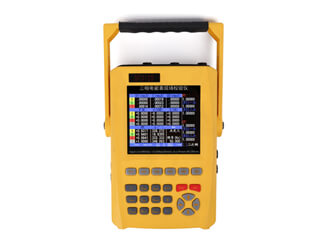
The GF312D is a handheld three phase standard reference meter for calibrating three-phase and single-phase energy meter errors, for both static and…
GF312D1 Three Phase Energy Meter Calibrator
The GF312D1 is a handheld three phase energy meter calibrator for on-site three-phase energy meter error testing, and it also serves as a…
GF3000 kWh Meter Test Bench
The GF3000 is a multi-position three phase energy meter test bench for laboratory testing of energy meters. The manufacturer's category page lists…
GF102 Single Phase Energy Meter Tester
The GF102 is a portable single phase energy meter test bench for testing single-phase meters. The manufacturer's category page lists phase shift 0…
How wholesale buying works here
Buyers send the model, the test or measurement requirement, and the quantity needed. This site does not state a price, a minimum order or a lead time figure, because the reference material behind it does not give a company-site figure for them. Ask in your inquiry to confirm the price, the lead time, the payment terms, the trade terms, and the reply time, and confirm each in writing before payment.
Choosing by job
Choosing test equipment by job is easier than choosing by catalogue page. A meter calibration job needs a reference and a test bench or handheld tester that covers the meter types on site. A relay job needs an injection set with the right number of outputs for the protection functions under test. A power quality job needs an analyzer with the channels, recording time and measurement standard the investigation requires. A transformer job needs an analyzer whose test list covers ratio, polarity, burden and excitation for the transformer types involved. A time synchronization job needs a server whose outputs match the devices to be synchronized.
Start every selection from the device under test, not from the instrument. Write down what must be measured, what accuracy the result must support, what standard the work must follow, and what conditions the test will run under — field or laboratory, indoor or outdoor, mains powered or portable. An instrument that meets those four items is a candidate; an instrument that meets only three is not, however attractive its remaining figures look.
Then check the practical items that datasheets describe less prominently: the display size and readability in the working environment, the data storage and download method, the weight and carrying arrangement for field work, the power supply, and the accessories included, such as clamps, leads and software. A missing accessory discovered on site costs more than the same accessory ordered with the instrument, in time as well as in money.
Compare models on the same requirement list, and ask for any figure that differs between listings to be settled from the current datasheet in writing. Where this site states that a figure is unresolved, do not fill the gap from another listing; ask for the datasheet figure that applies to the model and version you will receive, and keep that confirmation with the order.
Finally, plan the first use before ordering. Decide who will run the first tests, what test records will be kept, how results will be checked against known references, and how often the instrument itself will be verified. An instrument bought without a first-use plan tends to be used once, doubted, and then left in a cupboard, while the same instrument bought with a plan becomes the reference the whole team trusts.
What this site does not claim
What this site does not claim matters as much as what it does. This site does not state a founding year for the company, because the reference material gives different years from different sources and none has been settled by a company-site statement. It does not state an employee count, a factory size, an output figure or a revenue figure, because no company-site page in the reference material gives one. It does not describe the company as a market leader, because that wording comes from a shop self-description, not from an independent market assessment.
This site also does not state a price, a minimum order or a lead time figure for any product, because the reference material does not give a company-site figure for them; shop listing figures are recorded internally only and are never published here. It does not state a certificate for the company, because no certificate with a number and a certifying body appears in the reference material. Standards named on product pages are design and test references from the manufacturer's pages, not company certifications. Where a figure in the reference material is unresolved — a rating, an accuracy figure, or a specification that differs between documents — this site says so on the page concerned and publishes no figure, rather than choosing the more convenient one. A buyer who needs any of these items settled should ask for the document that states it, and keep that document with the order. A buyer who is offered a figure that this site deliberately omits should ask for the document behind it, not for a verbal assurance.
Range at a glance
The families on this site are: energy meter calibration, relay test sets, power quality analyzers, split core current transformers, current transformer testers, GPS time servers, medium voltage current transformers, primary injection test sets, high voltage test sets (overview only), and reference standard meters. Detail pages exist only for models with a fetched category-page or datasheet anchor; other models are covered at category level only.
Send an inquiry: include the model, the test or measurement requirement, and the quantity you need. Before payment, confirm the model, the specification from the current datasheet, the quantity, and the delivery terms.